
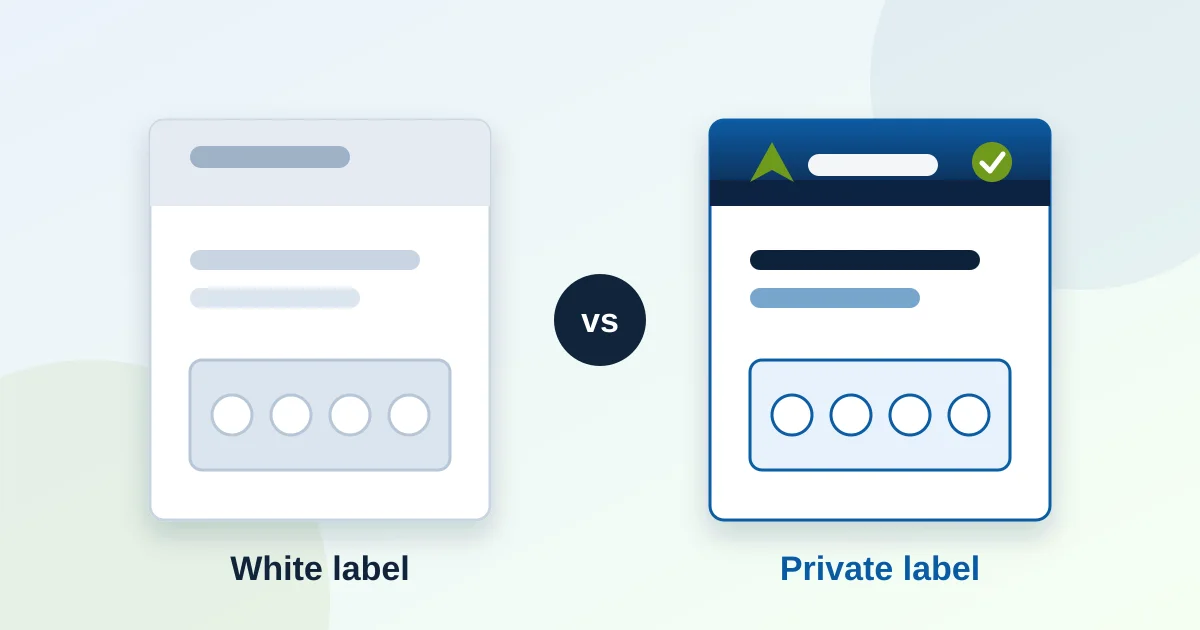
Private label vs white label medicines: which is right for your brand?
Distributors who want to sell medicines under their own name usually hear two terms: private label and white label. Suppliers use them loosely, and sometimes as the same thing. This guide explains how the two are normally used, what you control in each, and how to choose between them.
What is white label?
White label means the manufacturer already makes a product, and you sell it under your brand. The formulation, strengths and pack format are the manufacturer’s existing ones. You supply your brand name and artwork, and the product is labelled and packed for you.
It is the fastest way to start. There is usually less to specify, and a product that is already made in a WHO-GMP certified facility can be ready sooner than one that is developed for you.
What is private label?
Private label means the product is made to your requirements and sold under your brand. You decide more of the details: the strength, the pack size, the carton design, the leaflet language and the labelling for your market’s rules.
Our private label service works this way. We manufacture in a WHO-GMP certified facility, and you keep the brand. If you need a formulation that is not in our range, custom manufacturing covers that.
Private label vs white label at a glance
| White label | Private label | |
|---|---|---|
| Formulation | Manufacturer’s existing formula | Made to your specification, within what is feasible |
| Strengths and pack sizes | From what is already offered | Chosen for your market |
| Packaging and artwork | Your brand on standard packs | Designed for your market and its labelling rules |
| Time to first order | Usually shorter | Usually longer, because more is agreed first |
| Minimum order | Often lower | Depends on the product and pack |
| Differentiation | Lower: others may sell the same product | Higher: the product and pack are yours |
The minimum order and the timeline depend on the product, so ask for a quotation for the specific medicine rather than relying on a general rule.
What changes for registration?
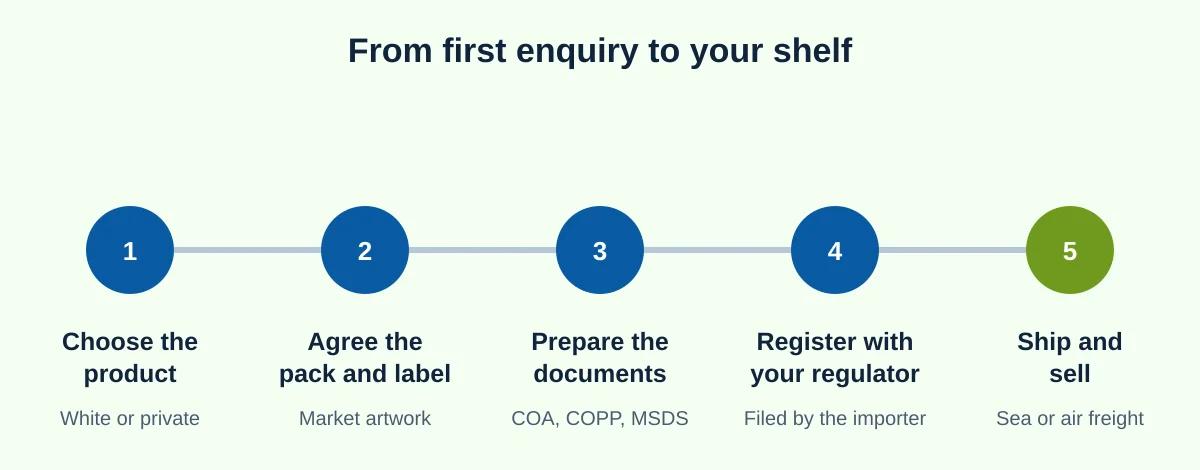
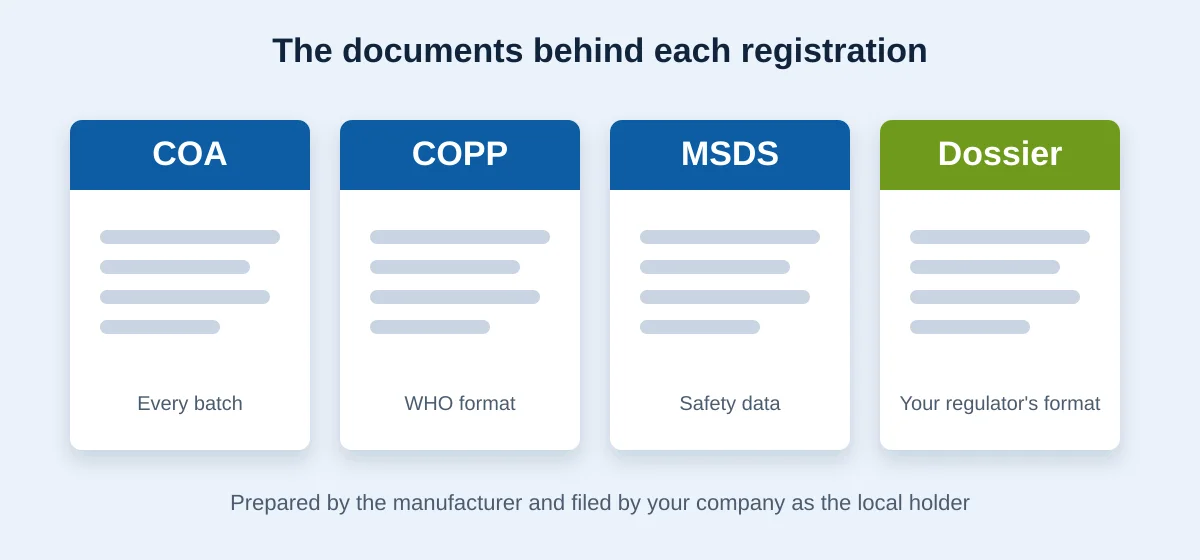
Most countries register a medicine through the importer or the brand owner, and the regulator decides what it needs. Whichever model you choose, you will typically need documents from the manufacturer:
- A Certificate of Analysis (COA) for each batch
- A Certificate of Pharmaceutical Product (COPP)
- Safety data sheets (MSDS)
- A dossier in the format your regulator expects
We prepare these as part of our export documentation. Registration takes time and the rules differ by country, so start the dossier while the product is being made. The pages for each of our markets describe how registration usually works there. If you plan to sell in North America, the guides for the United States and Canada explain how the rules differ for supplements, cosmetics, over-the-counter products and prescription generics.
A private label product with its own strength or pack may need its own registration. A white label product that matches one already registered by the same manufacturer may follow a shorter route in some countries, but this varies, so confirm with your regulator.
How to choose
Choose white label if you want to start quickly, you are testing a market, or you want a proven product with fewer decisions.
Choose private label if you want a pack and brand that stand apart, your market has specific labelling or language rules, or you plan to build a range under one brand over several years.
Many distributors start with one or two white label products and move to private label as their brand grows.
Ask before you commit
Whichever model you pick, ask the manufacturer:
- Which certifications cover the facility where your product is made?
- Which documents will you receive, and in what format?
- What is the minimum order for each product and pack?
- Who owns the artwork and the brand, and who holds the registration?
- How long does production take, and when is the shipping schedule confirmed?
Start a conversation
Tell us the medicine, the strength, the pack and the country you plan to supply, and we will reply with what is possible and a quotation. You can request a quotation here or browse the product range first.